Bed Bug Certified
Mattress and Box Spring Encasements
Bed Bug Certified Encasements by Mattress Safe®
Create a Bite Proof Barrier for Maximum Protection

Bed Bug Certified
Mattress and Box Spring Encasements
Bed Bug Certified Encasements by Mattress Safe®
Create a Bite Proof Barrier for Maximum Protection
Mattress Safe® Mattress and Box Spring Encasements
Your First Line of Defense for Protection Against Bed Bug Infestations
The Importance of Mattress Encasements
Mattress and box spring protectors are very important weapons to protect your bedding against bed bugs or during a bed bug treatment program.
A bed bug certified encasement creates a bite proof barrier for maximum protection. Mattress Safe® laminated “Superior” or “Ultimate” encasement will not allow bed bugs to enter, escape or bite through the encasement. Used as a prevention tool or during a treatment program, bed bug certified mattress encasements are safe, eco-friendly, and provide non-chemical protection.
What Is the Best Mattress Encasement for Bed Bugs?
Look for an encasement that has been tested against bed bugs, closes tightly at the zipper, and fits your mattress. Here is what to check before you buy.
Test results you can read. Don’t settle for “bed bug proof” on a label. In our tests, about 500 bed bugs at mixed life stages were placed against the laminated fabric and the zipper. None fed and none escaped. See the full testing results.
A zipper built for the job. Our encasements use a micro-tooth zipper and our patented Zipper with the Hook® (U.S. Patent No. 7,849,543). The Ultimate adds a sewn-in loop and zip-tie, so the encasement stays closed.
The right fit. Measure your mattress before you order, including its height. We make Plus+ sizes for deeper mattresses. Because of hygiene and bed bug concerns, we can’t accept returns on opened or used products.
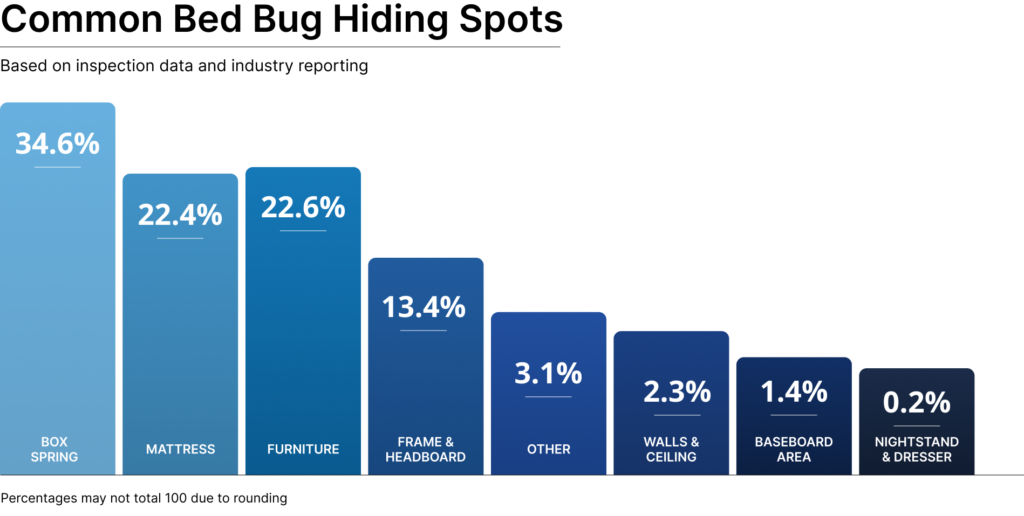
Protection for the whole bed. A mattress encasement doesn’t protect the box spring, and bed bugs can live for over a year without feeding. Cover both, and leave the encasements on and zipped.
Which encasement do you need?
| If you want to protect | Choose |
|---|---|
| A mattress, waterproof on all six sides | Sofcover Ultimate |
| A mattress, waterproof on top and halfway down the sides | Sofcover Superior |
| A box spring | Sofcover Stretch Knit Box Spring |
| Pillows | Sofcover PillowSafe |
| A sofa, chair or ottoman | Sofcover FurnitureSafe |
All five are bed bug certified and made in the USA.

Importance of Prevention – Proactive Measures:
Mattress & box spring encasements protect from bed bug infestations and subsequent damage associated with them.
- Protects customers investment in mattress & box springs
- Early detection
- Prevents infestation

Importance of Treatment – Reactive Measures:
Mattress & box spring encasements are a critical part of an effective integrated pest management treatment plan.
- Salvages infested bedding after treatment
- Prevents the spreading of bed bugs
- Lowers the cost of subsequent treatments
- Bite proof
Biology and Behavior
Bed bugs are small parasitic insects known to feed on the blood of warm-blooded animals. Bed bugs, though not strictly nocturnal, are mainly active at night and are capable of feeding unnoticed on their hosts.
Bed bugs are a people problem, being spread by the movement of people from one location to another
- Except for the egg, all stages of bed bugs from nymphs to adults feed on blood
- Bed bugs are capable of surviving for over a year without feeding
- It may take several weeks for an immature bed bug to fully digest a blood meal.
- Bed bugs can get a blood meal from other bed bugs.
- Generally speaking, bed bugs spend most of their time hiding, preferring undisturbed areas
- While bed bugs are commonly active at night, they will feed in the daytime essentially attacking their host in its sleep.
- Bed bugs will typically avoid crawling on their host when seeking a blook meal.